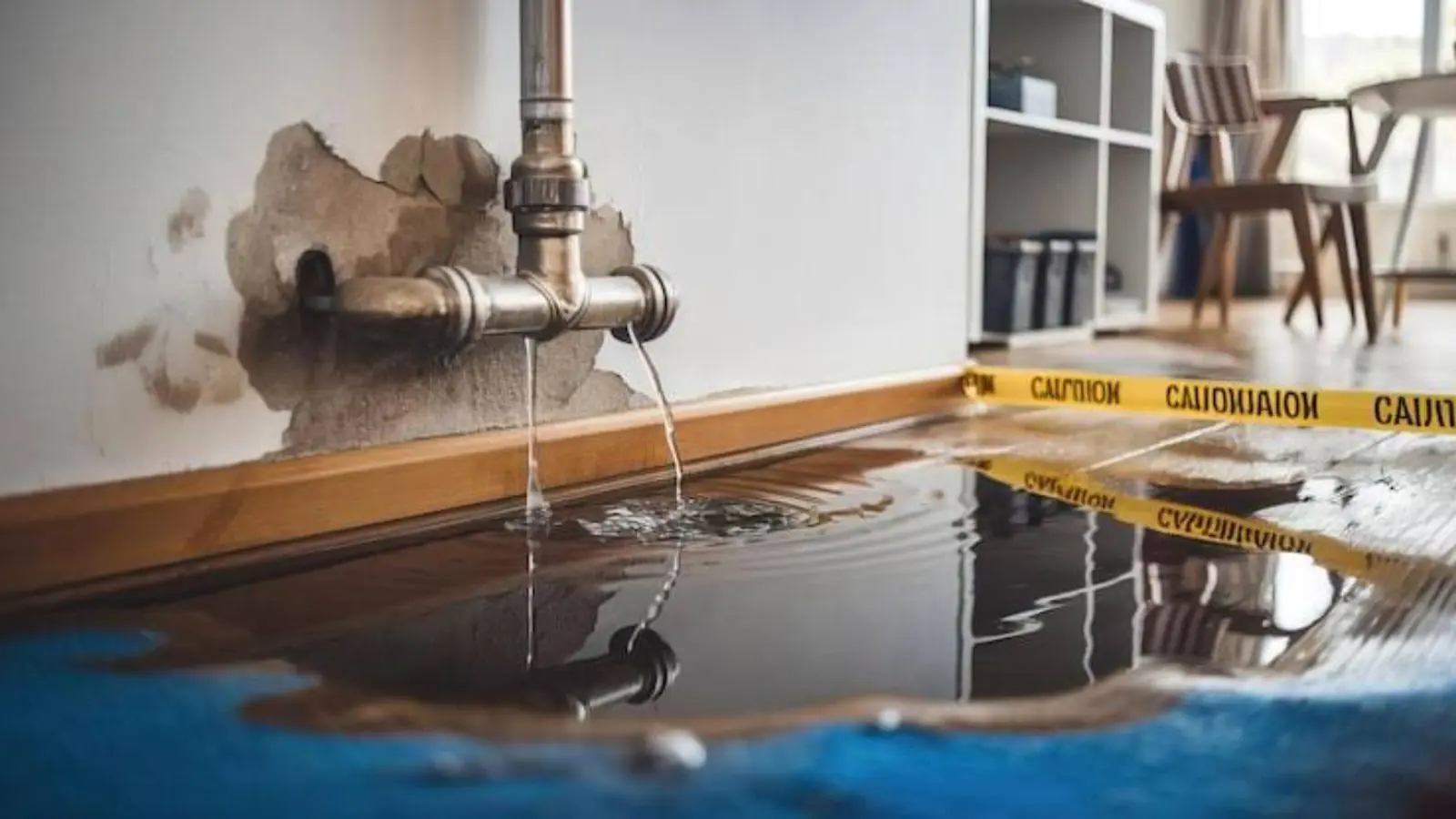
The first minutes in three moves
Close the shut-off valve, stay clear of wet electrics, and call the line. In that order, those three moves stop the supply, protect you and start the drying. Everything else on this page adds detail for a burst pipe in Hyattsville, MD.
A quick sequence helps because panic wastes minutes. Know where your main shut-off sits before you need it, usually near the water meter or where the line enters the building. Tell everyone in the home where it is.
Water that is still running keeps soaking drywall, subfloor and insulation. The EPA's drying window is 24 to 48 hours, which is why every hour counts. The line is open 24/7 for emergency water removal.
Burst pipe, step by step
- 1
Close the water
Turn the main shut-off clockwise, or close the fixture valve if the leak is at one sink or toilet. Open a low faucet to drain the line.
- 2
Cut power only if the panel is dry
If water is near outlets or the panel, do not step into it. Switch off the wet area's circuits only when the panel is dry and you can reach it safely.
- 3
Lift what you can
Carry rugs, small furniture, laptops and papers into a dry room. Leave heavy items for the crew.
- 4
Photograph before cleanup
Take wide and close photos of the pipe, the wet rooms and damaged belongings. Note the time you found the water.
- 5
Call the line
Call (301) 936-0619 and describe the source, the rooms involved and whether the water is clean or from a drain. You will hear the scope and price before crews begin.
Water running right now?
Close the valve, then call (301) 936-0619. The line never closes.
Safety: water, power, gas and sewage
Stay out if water touches electrical or gas equipment
Water and electricity do not mix. If water covers outlets, reaches the panel, or you would have to stand in water to touch the panel, stay out and phone your electric utility or 911 before the restoration line.
If you smell gas, leave the building, then call 911 and the gas company from outside. Washington Gas lists its leak line as 844-WASHGAS (844-927-4427), option 1.
- Keep children and pets away from water that may be contaminated.
- If the water came from a drain or toilet, it may contain sewage. Do not wade in it.
- Do not use a household vacuum on standing water.
Whose pipe is it: your plumbing or a WSSC main
A short word on sorting the cause. Bursts usually come from a frozen line, an aging fitting, a failed connector at a washer or water heater, or pressure that a worn valve could not hold. You do not need the cause to act. Shut off the water first and work out the cause afterward.
Pipes inside the home are yours. A burst line behind a wall, under a sink or at a water heater is a house plumbing problem. Close your own main, call a plumber and call the restoration line for the wet materials.
A water main break in the street is different. On its website, WSSC Water gives 301-206-4002 as the 24-hour emergency number to report a main break or a sewer backup into a house. The utility serves Prince George's and Montgomery counties.
If the water in your basement comes from outside, tell the dispatcher. For timing, WSSC says a main repair typically takes 4 to 6 hours once crews have uncovered the pipe. Your own cleanup does not need to wait for that.
Hyattsville, MD: freeze context and local contacts
Winter is the pipe season. At Reagan National Airport, the closest long-term NOAA station, the 1991 to 2020 normals put the January mean at 37.5 F and the January low at 30.1 F. A mean low of 30.1 F sits just under freezing, so cold snaps can stress exposed pipes in exterior walls, attics and unheated rooms. The same normals record 13.70 inches of snow a year.
The City of Hyattsville's own guide on who to call lists the WSSC emergency number and the Washington Gas leak line. City hall is at 4310 Gallatin Street. The city brochure sends most construction work through a Prince George's DPIE permit, so ask DPIE or the city before you rebuild walls, wiring or plumbing after a burst.
What to have ready when you call
- The address and which floor or room is wet.
- Whether the water is stopped, and how you stopped it.
- Whether you think the water is clean, from a drain or from a main.
- Whether anyone has been near wet outlets, the panel or a gas smell.
- Your homeowners or renters insurer, so you can report the loss the same day.
- If you rent, your landlord's contact, since the structure is theirs.
After the water stops
Standing water comes out first, using extraction units. Then water mitigation takes over, using air movers, LGR dehumidifiers and moisture meters. Readings are logged until the structure reads dry.
Water damage cleanup covers the wet materials that cannot be saved and the contents that can. The line serves Mount Rainier and Riverdale Park as well as Hyattsville, with same-day response offered when available.
Plan on removing what cannot dry. Carpet pad, soaked insulation and swollen baseboard are common losses after a burst, while hardwood, framing and many cabinets can often be dried if work starts fast. A technician with a thermal imaging camera can show you which is which before anything is torn out.
Insurance often covers sudden pipe failures but not slow leaks, so check your policy and keep your photos.
The EPA advises drying water-damaged areas and items within 24 to 48 hours to prevent mold growth, which is why the first day matters.
Frequently asked questions
Only for wet areas, and only when the panel is dry and reachable without risk. If water touches outlets or the panel, stay out and phone your electric utility or 911 first.
The EPA's drying window for preventing mold growth is 24 to 48 hours. Extraction and drying should begin the moment the source is stopped.
A sudden failure is often covered, a slow leak usually is not. Check the policy, report the loss the same day and keep the photos.
The line answers 24/7 for emergencies, and same-day response is offered when a crew is free. No arrival time is promised, but you will get steps to follow while you wait.
Call WSSC Water at 301-206-4002, its 24-hour emergency line. WSSC puts a typical main repair at 4 to 6 hours after crews uncover the pipe. If water has entered the home, our line can still handle extraction and drying.
Shut off the main as soon as you can safely enter, photograph everything and call the line. Water that ran for hours usually reached subfloor and insulation, so ask for moisture readings.