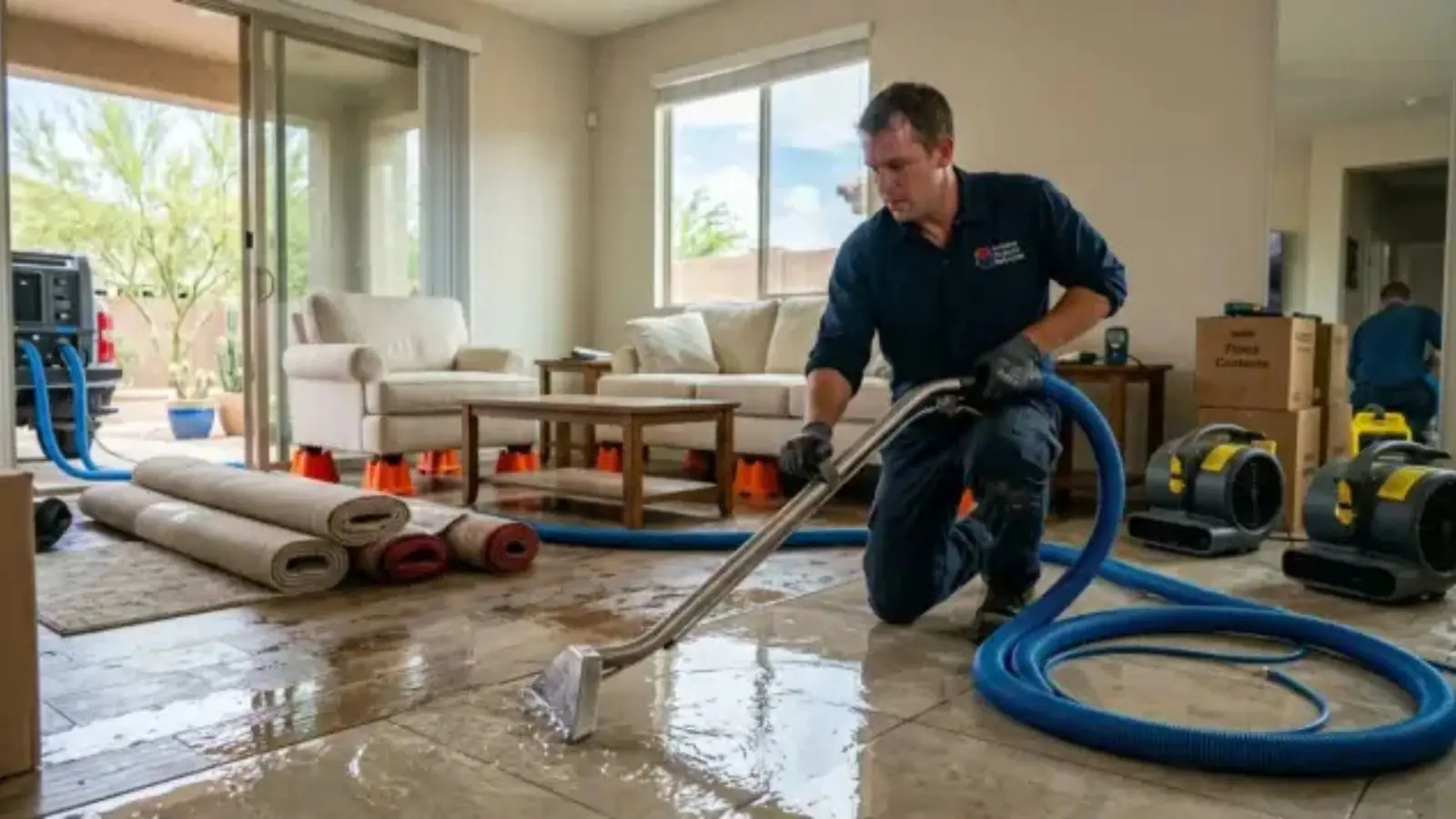
Standing Water in Your Hyattsville Home Right Now
If water is pooling in your Hyattsville home right now, the next hour matters. The (301) 936-0619 line runs 24/7, and crews respond the same day when available. Emergency water removal is the fast pumping and extraction of standing water from floors and basements before it soaks into drywall, subfloors and framing.
While you wait, stop the source if that is safe. Shut the main water valve, which is often near the water heater or where the supply enters the house. Lift valuables, electronics and rugs onto dry furniture, and keep people and pets out of any water that might be contaminated.
Turn off power to wet areas only if the breaker panel is dry and you can reach it without stepping in water. Take photos before you move things.
Local housing makes speed matter. The city counts nearly 1,000 buildings in the Hyattsville Historic District, which the National Register entry says grew mainly after the 1870s. Buildings of that age tend to have older supply lines, drains and wall cavities, and wall cavities are where hidden water settles.
Stay Out If Water Meets Power, Gas or Sewage
Safety comes before the phone call
Water around an electrical panel, outlets or plugged-in appliances is a shock hazard. Stay out of the room. Cut power only if the panel is dry and safe to reach, and call 911 and your electric utility before you call the line.
- If you smell gas, leave the building and call 911 and Washington Gas from outside. The Washington Gas leak line is 844-WASHGAS, option 1.
- If the water came up through a drain or toilet, treat it as sewage. Stay out, keep children and pets away, and call WSSC Water at 301-206-4002 for a sewer backup into the home.
- Do not wade through deep basement water. Hidden steps, floating objects and live circuits are hazards you cannot see.
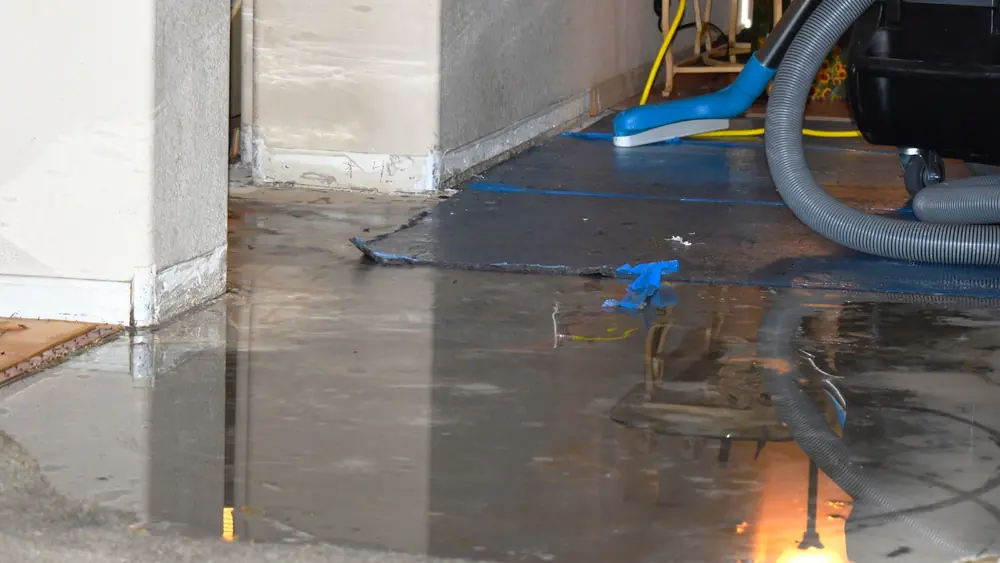
Burst Pipe Water Damage
A burst pipe keeps pouring until someone closes a valve, so the shutoff is the first job. Close the main shutoff valve inside your home, then open a faucet on the lowest floor to drain what is left in the lines. Pipes inside your walls, under sinks and at the water heater are on your side of the meter.
If the water is coming from a main in the street instead of from inside your home, that is a WSSC Water problem. WSSC takes water main break reports 24 hours a day at 301-206-4002. Its website says main repairs typically take 4 to 6 hours after crews dig up and uncover the damaged pipe.
Cold snaps cause many burst pipes. NOAA's 1991 to 2020 normals from the nearest long-term station, Reagan National Airport, put the January mean at 37.5 F with an average low of 30.1 F. A typical January night in this area dips below freezing, so pipes in exterior walls, crawl spaces and unheated basements are the usual trouble spots.
Once the pipe is off and the water is out, the wall cavity still holds moisture. Water mitigation is the drying stage that follows, using moisture meters, air movers and LGR dehumidifiers to dry framing and subfloor before anything is closed up.
What to Do by Water Depth and Source
Sort your situation here, then call the line.
| What you see | What it usually means | First move |
|---|---|---|
| Puddle under a sink or appliance, clean supply line | Clean water, small area | Close the fixture valve or main, towel up the water, and call if it reached carpet or a wall |
| Water across a whole room from a burst pipe | Clean source, but pumps or extraction are needed and drywall and flooring are at risk | Shut the main, keep power off wet areas only if safe, call the line now |
| Inches of water in a basement after heavy rain | Storm drain or groundwater, often significantly contaminated | Stay off wet floors, check the panel, call the line, and keep sump discharge off a neighbor's property |
| Gray or dark water from a floor drain or toilet, foul smell | Sewage, grossly contaminated | Stay out, call WSSC at 301-206-4002 and a WSSC-registered plumber, then call the line |
| Water touching outlets, the panel or a plugged-in appliance | Electrical hazard | Stay out and call 911 and your electric utility first |
The ANSI/IICRC S500 standard groups water into three categories. Category 1 is a clean source, Category 2 is significantly contaminated, and Category 3 is grossly contaminated, such as sewage or floodwater.
Water on the floor tonight?
Call the 24/7 line at (301) 936-0619 and tell the dispatcher where the water is and where it came from.
The Equipment That Pulls Standing Water Out
A crew usually brings several machines and switches as the water gets shallower.
Submersible pumps
A submersible pump sits in the water and pushes it through a discharge hose to a drain or outside. It clears the first several inches of a basement quickly.
Truck-mounted extraction units
A truck-mounted unit runs a powerful vacuum from the curb through long hoses into the house. It pulls water out of carpet, pad and low spots.
Portable extraction units
Portable extractors reach upper floors, finished rooms and tight stairs, where hoses cannot go.
Wet vacuums
Wet vacuums finish corners, stair treads and baseboard edges. They also handle small appliance leaks.
Moisture meters and thermal imaging cameras
After extraction, a moisture meter reads wet drywall, wood and subfloor. A thermal imaging camera shows wet areas behind walls.
From First Call to Dry Floor
- 1
You describe the water
The dispatcher asks where the water is, how deep it is and where it came from.
- 2
Crews are sent when available
The line answers overnight and on weekends, and same-day response is offered when available. No arrival time is promised on the call.
- 3
Scope and price are explained
On site, the crew checks the water category and the rooms affected. Scope and price are explained before work starts.
- 4
Pump, extract, then start drying
Water comes out first. Air movers and dehumidifiers then start drying, and the crew marks what can be dried and what has to be removed.
What Changes the Size of an Emergency Job
Small, clean-water spill
Scope: one roomA supply line leak on a kitchen floor, caught within hours.
Clean water across several rooms
Scope: one floorA burst pipe that ran overnight, with extraction and several days of drying.
Basement with inches of water
Scope: lower levelPumps first, then extraction. Outside water is often Category 2 or 3.
Sewage or floodwater
Scope: contaminated lower levelContaminated water adds cleaning steps. Drywall, carpet and pad often come out.
Water through several floors
Scope: whole buildingWater that traveled through ceilings and wall cavities.
Water category, affected area, materials, drying days and rebuild scope set the final scope. Price is explained before work starts.
Insurance and Emergency Water Removal
General guidance, not a coverage decision
Sudden and accidental water damage, such as a burst pipe, is often covered by homeowners policies. Gradual leaks and neglect often are not. The Maryland Insurance Administration says most homeowners policies do not cover flooding, and that sewer or water backup is an optional endorsement.
Check your policy and ask your insurer what applies to you. Take dated photos before cleanup starts and keep damaged items until you are told otherwise. Renters policies cover your belongings, not the building.
After the Water Is Out
Removal is only the first stage. If the water came from a storm or rising groundwater, flood damage restoration covers the contaminated-water cleanup, material removal and rebuild planning. For clean-water losses, water damage cleanup handles surfaces, contents and finishing work after the structure is dry.
Heavy rain is a real basement risk here. The city's own Lower Ward 1 stormwater study says much of the storm drain system dates from 1960 to 1990, and that 41st Street experiences standing water during and after intense rain. A basement near a low street or a clogged inlet can flood in a downpour even when no river overflows.
The line serves Hyattsville and nearby towns, including Brentwood. Night and weekend calls go to the same number, (301) 936-0619.
Emergency water removal questions from Hyattsville homeowners
Yes. The line at (301) 936-0619 is staffed 24/7, including nights, weekends and holidays. Same-day response is offered when available.
Crews are dispatched based on location and demand, so no arrival time is promised on the call. The dispatcher will tell you what to do while you wait.
As fast as safely possible. The EPA advises drying water-damaged areas and items within 24 to 48 hours to prevent mold growth, and pumping is the first step toward that.
Only if the electrical panel is dry and you can reach it without stepping in water. If water is touching the panel, outlets or plugged-in equipment, stay out.
Call 911 and your electric utility first, then call the line. Do not turn switches on or off while standing in water.
A water main break or a sewer backup into the home goes to WSSC Water at 301-206-4002, which runs 24 hours a day. Water inside your home from a pipe, appliance or storm goes to the restoration line.
Water category, the area affected, the materials involved, equipment and drying days, and how much has to be rebuilt. A clean-water spill in one room is a different job from sewage in a finished basement.
Scope and price are explained before work starts, so you can decide with the numbers in front of you.