Short answer: sudden damage is often covered, slow damage often is not
Homeowners insurance often covers water damage that is sudden and accidental, such as a supply line that bursts or a water heater that fails overnight. It usually does not cover damage from a slow leak, long neglect or flooding. Your policy wording decides, so read it or ask your insurer before you assume either way.
The state regulator, the Maryland Insurance Administration, tells consumers that flooding sits outside most homeowners policies, and so does damage that grows out of a slow leak. Mold gets the same treatment: most policies leave it out unless a covered peril caused it. The cause of the water matters as much as the damage you can see.
This guide is general information for Hyattsville, MD, not a coverage opinion. If water is active, call the line for emergency water removal and report the loss to your insurer the same day.
Why the cause of the water matters more than the mess
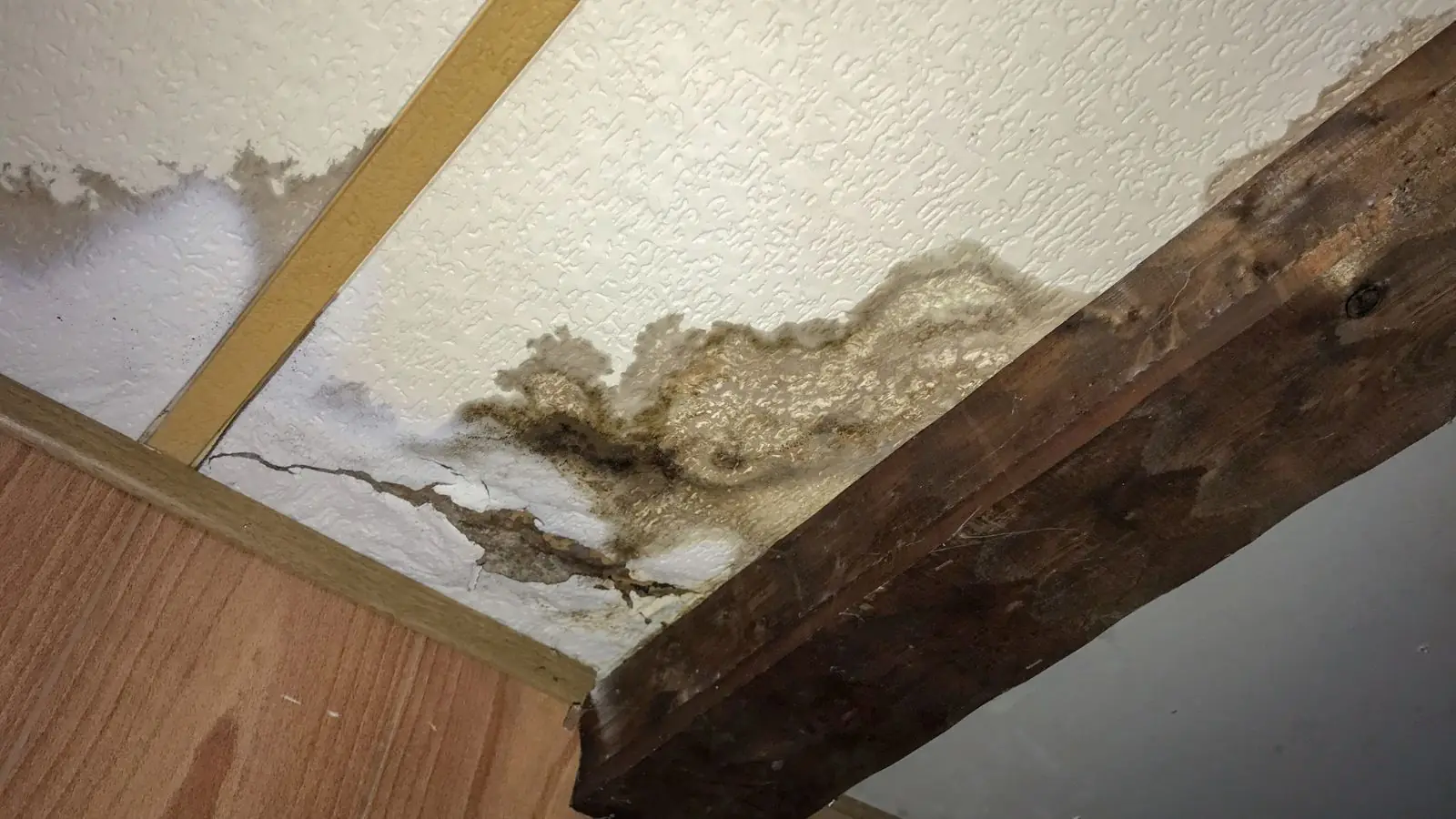
Insurers sort losses by cause first. A pipe that split on a cold night is a sudden event with a clear start. A trap that wept for months behind a vanity is a gradual one, and the stained cabinet floor and swollen baseboard tell the story.
Adjusters look for signs of age: rust on fasteners, dark rings on framing and layered ceiling stains. Moisture meters and thermal imaging cameras map the spread, but they cannot settle coverage. Your insurer makes that call.
Separate the water damage from the failed part. The state insurance regulator cautions that many policies do not pay for repairing or replacing the pipe or drain itself. The wet drywall, flooring and contents may be a different line of the same claim, so ask about each piece.
Loss types and what to ask your insurer
Wording, endorsements and exclusions differ from policy to policy.
| Type of loss | Usually covered? | What to ask your insurer |
|---|---|---|
| Burst supply line or appliance hose | Often covered when sudden and accidental | Does the policy pay for the wet materials and for opening walls to dry them? |
| Slow leak under a sink or behind a wall | Usually not covered for the resulting damage | How does the policy define continuous or repeated seepage? |
| Roof leak after a storm | Often covered if a storm opened the roof, less often if worn roofing seeped over time | Does the age or condition of the roof change how this loss is treated? |
| Flood from rising or surface water | Usually excluded from homeowners policies | Do I carry a separate flood policy, and when did it start? |
| Sewer or drain backup | Often needs an added endorsement | Did I buy water backup coverage, and what does it include? |
| Mold after a leak | Usually excluded unless it follows a covered loss | Does my policy limit mold, and does this loss count as covered? |
| Renter's belongings | Renters policies often cover belongings, not the building | Who insures the walls, and does my policy cover contents after a leak from above? |
Water still spreading while you sort out coverage?
Call (301) 936-0619 and the line can start drying while you phone your insurer.
Flood, sewer backup and the 30-day wait
Flood damage is the loss people most often assume is covered and most often find is not. The regulator's storm guidance says a standard homeowners policy almost never pays for it. Flood cover is its own policy, commonly sold through the National Flood Insurance Program.
As FEMA describes it, an NFIP policy generally takes 30 days to start. That means buying a policy when a storm is in the forecast does not help.
Sewer or water backup is a different animal. The regulator calls it an add-on that insurers are required to offer. If you did not buy it, a backed-up floor drain may fall outside the policy. When contaminated water is involved, the cleanup itself is flood damage restoration work, with extraction, removal of wet materials and drying done under containment where needed.
Hyattsville, MD: how local conditions bear on a claim
In its Lower Ward 1 Resilient Stormwater Systems Study, the city reports standing water on 41st Street during and after intense rain, and storm drains that mostly date from 1960 to 1990. A basement that takes water from a yard drain or a street inlet is not the same event as a burst pipe. Tell your insurer exactly how the water entered, because they may sort the two differently.
On its website, WSSC Water explains that blame for a sewer backup depends on where the blockage sits. Owners look after the pipe between the property line and the house, while WSSC looks after its main. A WSSC-registered plumber is the first call, and WSSC keeps a claims office open for possible reimbursement.
Prince George's County's flood history page names Tropical Storm Agnes, June 1972, as the county's storm of record, and puts Hyattsville's Green Meadows subdivision among the hardest hit. For your own address, search the FEMA Map Service Center at msc.fema.gov. The effective map panel is a useful first fact to bring to any flood coverage conversation.
Claim timelines and what to document
Under COMAR 31.15.07.03, Maryland's rule on unfair claim settlement practices, two kinds of insurer delay count as unfair, with exceptions. One is leaving a claim notice unacknowledged past 15 working days. The other is taking longer than 15 working days to affirm or deny coverage once completed claim forms arrive.
Those rules give you dates to track. Note when you reported the loss, keep copies of every form, and ask for a claim number. Wet materials cannot wait 15 working days, so document first and dry right away.
Record before anything is removed
- Take wide photos of each wet room, then close-ups of the damage, the source and any visible staining, before furniture moves.
- Photograph the failed pipe, hose or fixture, and keep the part if you can.
- List damaged belongings with a brief description, and keep receipts or model numbers if you have them.
- Write down the date and time you found the water, when you shut it off and who you called.
- Save moisture readings and any drying logs a restoration crew gives you.
How a written scope helps when you talk to your insurer
A written scope lists the rooms affected, the water category, the materials to be removed or dried, and the equipment planned, including air movers and LGR dehumidifiers. This business walks you through scope and price ahead of any work, so you see that document before agreeing to anything. You can hand a copy to your insurer, who decides what the policy pays.
Photos, drying readings and the written plan that match the cause you reported leave less to guess at. Ask whether the crew follows ANSI/IICRC S500, the published water damage restoration standard.
Then read the water mitigation steps so you know what drying logs should show. The line also serves nearby towns, including Mount Rainier and College Park, so owners just outside the city can ask the same questions.
Frequently asked questions
A burst pipe is a sudden and accidental event, and policies often cover the resulting water damage. Many will not cover repair of the pipe itself. Check your policy and ask your insurer what is included before work begins.
Usually not under a standard homeowners policy, since flooding is typically excluded. Water that backs up through a drain may be covered only if you added a water backup endorsement. Ask which one your loss counts as, and say how the water entered.
A renters policy covers your belongings, not the building, per the state regulator's water damage handout. If a leak from the unit above ruins your furniture, your renters policy may respond. The structure is your landlord's concern and their insurer's.
COMAR 31.15.07.03 sets 15 working days as the mark for two things: acknowledging a claim, and affirming or denying coverage after forms are complete. Missing either is an unfair practice, with exceptions. Keep a dated log and ask your insurer about its own timeline.
Most policies shut mold out unless a covered peril set it off, the regulator says. So the answer often follows the leak. If the water loss was covered, ask whether mold has its own limit.
It depends on where the blockage is, according to WSSC Water. You maintain the pipe from the property line to the house, and WSSC maintains its main. Its 24-hour line for a sewer backup is 301-206-4002, and its claims office handles possible reimbursement.