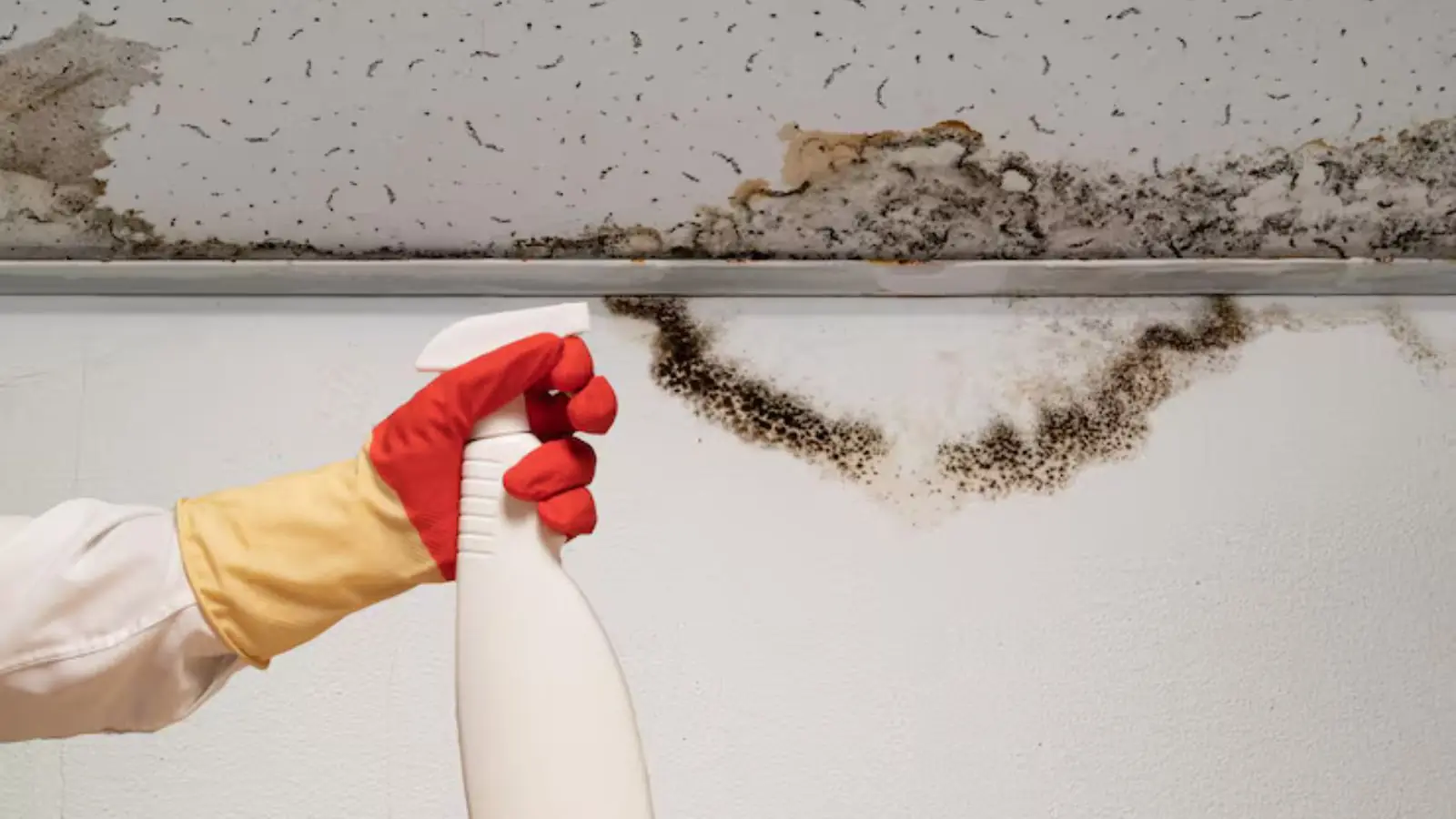
A dark ceiling spot is a water story first and a mold question second
Early signs of mold on a ceiling include dark or fuzzy spots, a spreading stain, a musty smell and paint that bubbles or peels. None of these proves mold on its own. Dust, soot, old smoke and plain water staining can look just as dark, and only sampling by a qualified person can say what a spot is.
The EPA says mold will not grow without water or moisture. So the useful question is where the water came from, whether it is still coming, and how big the affected area is.
People search for black mold because the dark color looks alarming, but mold comes in many colors and so do non-mold stains. A black spot can be old dirt, and a pale patch can be mold. The label on a color chart is not a test.
What you can read from a ceiling is its pattern. Rings with a darker edge suggest repeated wetting. A soft, sagging section suggests the drywall has absorbed a lot of water. Those clues point to the water problem, which is the thing to correct. Questions about health belong with a physician.
One more habit helps: mark the edge of the stain with a pencil and write the date beside it. If the line moves after rain, a shower or an air conditioner cycle, you have found the trigger. That note is also useful to a landlord, a roofer or an insurer.
Where the moisture usually comes from
Ceiling stains tend to trace back to one of a few sources. Matching the pattern to the source speeds up the fix.
Roof or flashing leak
Stains that appear or grow after rain often point to the roof. The mark may sit away from the actual entry point because water travels along framing before it drips.
Unit or floor above
A ring that grows when someone upstairs showers or runs a washer suggests a tub, toilet or supply line. In a rental, tell the landlord in writing the same day.
Bathroom fan problems
A fan that vents into the attic, or does not vent at all, can leave a damp patch above the shower. Check that the duct actually reaches the outdoors.
HVAC condensate pan or line
An air handler in the attic or a closet drains condensation through a pan and line. If the pan overflows or the line clogs, water can soak the ceiling below.
Do not scrub, sand or spray a large area
Leave a big patch alone until the source is known
Disturbing a large moldy area can spread material through the room. If the water source is still active, cleaning will not hold anyway.
Ceilings also hide wiring and light fixtures. Water near either one is an electrical concern, so cut power only if the panel is dry and safe to reach, and call 911 or your electric utility if there is any risk.
- Do not sand, scrape or wire-brush the ceiling.
- Do not spray bleach or run a fan that blows across the patch.
- Do not paint over a wet or stained ceiling.
- Keep children and pets out of the room if the ceiling is sagging.
- If the ceiling is bulging with water, stay out from under it and call the line.
Spreading stain overhead?
Call the line at (301) 936-0619 and describe the size, the smell and when it appeared.
Hyattsville, MD: how the local climate loads the ceiling
NOAA's 1991 to 2020 normals, from the nearest long-term station at Reagan National Airport, give the area 41.82 inches of precipitation a year and a July mean temperature of 81.0 F. January averages 37.5 F.
That matters overhead. Heavy rain tests roofs and flashing, and a warm summer keeps air conditioners running for months, which means condensate pans and lines get steady work. A clogged line can overflow without anyone noticing until the ceiling shows it.
Fix the water first, then size the cleanup
Stop the source: repair the roof, close the leaking supply line, clear the condensate line or fix the fan duct. Then dry the area. EPA guidance is to dry water-damaged areas within 24 to 48 hours, and air movers and LGR dehumidifiers do that faster than open windows.
After drying, ask whether the damaged drywall can stay. Wet gypsum board that has stained, sagged or stayed damp usually comes out. A moisture meter reading, compared against a dry wall in the same room, is the check that tells you the ceiling is ready for new material. Once the moisture reads normal, water damage repair rebuilds and repaints the ceiling.
The 10 square foot line and when a professional steps in
The EPA's guideline is that a moldy area smaller than about 10 square feet is generally something a homeowner can handle, using detergent and water on hard surfaces. A ceiling is mostly drywall, which is porous, so a damaged section is often cut out instead of scrubbed.
Larger areas, repeated returns, or a ceiling that was soaked by dirty water call for a professional. Mold remediation on a larger scale uses negative air containment, HEPA air scrubbers and controlled removal, following ANSI/IICRC S520. Maryland does not currently run a mold remediation license under its 2008 law, so ask any company what training and standards it follows.
The same ceiling causes show up in neighboring towns that the line serves. Brentwood is covered on the Brentwood water damage restoration page, and Mount Rainier is covered on the Mount Rainier page.
Frequently asked questions
No. Dust, soot, old stains and mildew-like film can all look dark, and mold can be other colors. Only proper sampling by a qualified person can identify it.
Whatever the spot is, it points to moisture, so look for the leak.
The EPA's guideline is that areas under about 10 square feet can often be handled by the homeowner, with detergent and water on hard surfaces. Drywall is porous, so a stained ceiling is often cut out instead.
Stop the water first, and do not disturb a large area.
Air conditioners remove water from the air and drain it through a pan and a line. When the pan overflows or the line clogs, the water can soak the ceiling beneath it.
The EPA says to dry water-damaged areas and items within 24 to 48 hours to prevent mold growth. Air movers and dehumidifiers speed this up, and a moisture meter confirms the material is dry.
Maryland passed a 2008 law to license mold remediators, but the Maryland Home Improvement Commission says that subtitle terminated on July 1, 2019. Ask any company what training and standards it follows, such as ANSI/IICRC S520.
The Maryland Insurance Administration says mold is excluded in most policies unless it results from a covered peril. A gradual leak is often not covered.
Check your policy and ask your insurer before work starts, and keep photos.