The short answer: it is done when the readings say so
Water damage does not dry on a calendar. It dries when the wettest materials in the building reach the drying goal set from dry reference readings, and that depends on what got wet, how contaminated the water was, and how much air and dehumidification the crew can move through the space.
The EPA advises drying water-damaged areas and items within 24 to 48 hours to prevent mold growth. That is the window to start fast, not a promise that every wall and floor will be dry by then. Dense framing, subfloor and wet insulation often need more time than a carpet surface does.
A good crew skips the guesswork and measures. Moisture meters and thermal imaging cameras find the wet spots, equipment goes in, and the readings are checked again on later visits until they match the goals.
Material by material: what dries slowly and what dries fast
Different building materials hold and release water at very different rates. The table below describes the pattern in plain terms. It gives no day counts because the real pace depends on the rest of this article.
| Material | Why it dries slowly or fast | What the crew checks |
|---|---|---|
| Wood framing | Dense and thick, so moisture leaves slowly from the core. Surface can feel dry while the inside is not. | Meter readings at several depths and spots, compared with a dry piece of the same wood |
| Subfloor | Sandwiched between finished flooring and joists, so air barely reaches it. Often the slowest layer. | Readings from below if there is access, and through the floor with a meter |
| Drywall | Absorbs quickly and can swell, but a clean-water wetting often responds well to airflow if it is caught early. | Readings up the wall, thermal imaging for wet edges, and whether the board has softened |
| Carpet pad | Foam or fiber that holds water like a sponge and dries poorly in place. | Whether it is clean enough to save or should come out so the subfloor can dry |
| Hardwood | Takes in moisture slowly and gives it back slowly. It can move as it dries. | Board readings against a dry sample, plus checks for cupping and gaps |
| Insulation in a cavity | Traps water against the framing and blocks airflow. Wet batts often come out. | Readings inside the cavity after a small inspection opening |
Why humidity, heat and airflow change the pace
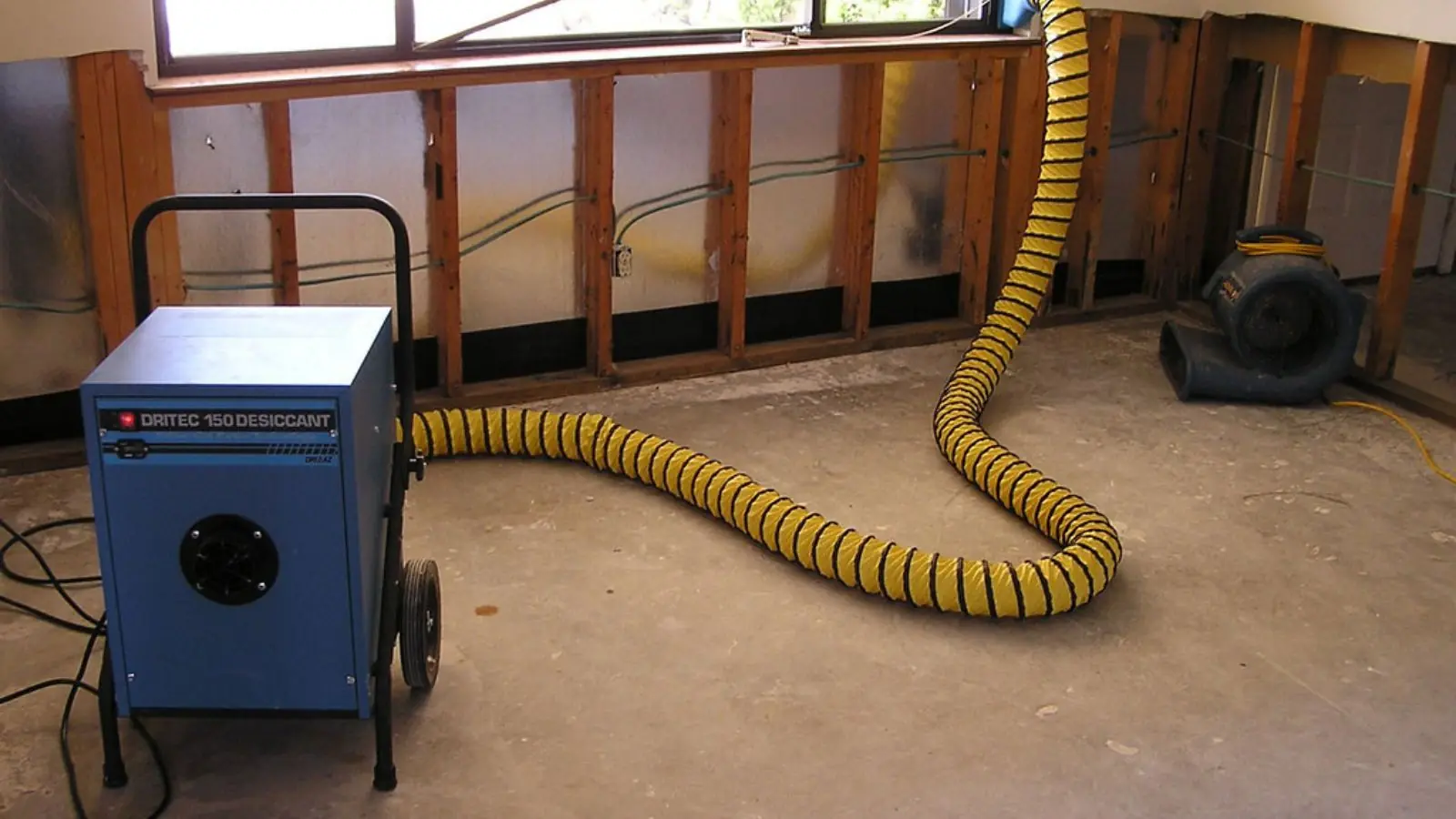
Drying is a moving-water problem. Air movers push dry air across wet surfaces, and the water leaves as vapor. Then something has to take that vapor out of the room, or the air fills up and drying stalls.
That job belongs to dehumidification. An LGR dehumidifier pulls moisture out of the air and drains it away, so the air can keep absorbing more from the walls and floors. Without it, closed rooms in a humid week can hold their dampness for a long time.
Warm air holds more water vapor, which helps drying only when the vapor is removed. Cold, still rooms dry slowly. The nearest long-term NOAA station, Reagan National Airport, records a July mean of 81.0 F, so summer losses in this area often come with a lot of moisture already in the air.
This is why the plan for a water mitigation job is never just fans. Equipment count follows the volume of the room and the amount of wet material, then gets adjusted on later visits.
Water still sitting in the house?
Call (301) 936-0619 to reach the 24/7 line and ask what drying plan fits your materials.
Hyattsville, MD: local facts that bear on drying
NOAA's 1991 to 2020 normals for Reagan National Airport, the nearest long-term station, show 41.82 inches of precipitation a year and a July mean of 81.0 F. January averages 37.5 F. In practice, that means a wet basement in July and a wet basement in January call for different drying plans, because warm humid air and cold still air behave differently.
The National Register entry for the Hyattsville Historic District says the town developed mainly after the 1870s, and the city's history page says the district holds nearly 1,000 buildings. Older buildings can have layered finishes and enclosed wall cavities, which is why readings inside cavities matter before a crew calls a wall dry.
How a crew decides the job is finished
- 1
Set the goal
The crew takes readings from unaffected parts of the same building to learn what dry looks like for each material in your home.
- 2
Map the wet area
Thermal imaging cameras show cool, wet zones behind finishes. Moisture meters confirm them and give numbers to track.
- 3
Run the equipment
Air movers, dehumidifiers and sometimes drying panels for floors or cavities go in. Doors and vents are managed so the drying air stays in the work zone.
- 4
Check again on later visits
Readings are repeated and logged. If a wall stalls, the crew changes equipment placement or opens a small area to reach the wet material.
- 5
Release the equipment
Equipment comes out only when the logged readings reach the goals. That is the finish line, not how the room feels to the touch.
When the water was not clean
ANSI/IICRC S500, the published standard for professional water damage restoration, groups water into categories. In plain words, Category 1 comes from a clean source, Category 2 is significantly contaminated, and Category 3 is grossly contaminated, such as sewage or floodwater.
Contaminated water changes the work before drying even starts. Porous materials like carpet pad and soaked drywall are often removed instead of dried, and surfaces get cleaned and sanitized. Fewer wet materials stay in the building, but there is more tear-out first.
If your loss involved a backed-up drain or outside floodwater, the plan often begins with emergency water removal before any drying equipment is set. Ask any company whether its crews work to S500, and ask how it records readings.
What you can do while the equipment runs
Your choices during the drying period affect how fast it goes.
- Keep doors and windows closed in the work zone unless the crew tells you otherwise, so the dehumidifiers are not fighting outside air.
- Leave the equipment running, even when it is loud. Turning it off to sleep can stall the whole job.
- Move rugs, boxes and furniture off wet floors, since stacked items trap moisture against the surface.
- Write down anything that looks worse, such as new staining, a musty smell or warping, and tell the crew at the next visit.
- Check your policy and ask your insurer what documentation it wants. Drying logs and photos help.
Where to go from here
If a loss has sat for a while, drying can still work, but the plan may include more removal. Neighboring towns like College Park and Bladensburg are part of the same service area, so the line can help with homes just outside the city too.
When the damage is already dry and you need walls, floors or ceilings rebuilt, that stage falls under water damage repair. Permit rules vary by the work, so ask Prince George's DPIE or the city before rebuilding walls, electrical or plumbing.
Frequently asked questions
For a small, clean spill on a hard surface, fans can help. For wet drywall, subfloor or carpet pad, fans alone move humid air around without removing the moisture. That is where dehumidifiers and meter readings do the work.
You usually cannot tell by feel. A moisture meter reads through the floor, and a crew can sometimes read from below. Ask for the readings, not just a verbal all-clear.
Readings change as materials release water. Repeat visits let the crew confirm progress, move equipment to the slowest spots and avoid running machines longer than needed.
No. The EPA guidance is about starting drying quickly to prevent mold growth. How long the whole building takes depends on materials, water category and the equipment on site.
They can, because older buildings often have enclosed wall cavities and layered finishes that hold water. The National Register entry for the Hyattsville Historic District says the town developed mainly after the 1870s, so many homes here predate modern materials. A crew checks inside cavities rather than assuming.