Hidden moisture usually gives a few clues before a wall fails
Water damage behind a wall usually shows up as a stain that grows, paint that bubbles or peels, a musty smell, or a baseboard that feels soft. Any one sign can have a harmless cause. Two or three together mean the cavity deserves a proper moisture check, which a moisture meter and a thermal imaging camera can do without cutting anything open.
The EPA advises drying water-damaged areas and items within 24 to 48 hours to prevent mold growth. A wall you cannot see into can run past that window without anyone noticing, which is why early signs matter.
Seven signs, what they usually mean, and the next step
| Sign | Likely cause | Next step |
|---|---|---|
| Brown or yellow stain that spreads over weeks | Slow leak from a supply line, drain or roof above | Mark the edge in pencil with the date, then check the stain daily |
| Bubbling or peeling paint | Moisture pushing out from behind the paint film | Do not pop or scrape it, and have the wall metered |
| Musty smell with no visible source | Damp insulation or drywall inside the cavity | Look for a wet room on the other side, then request a moisture scan |
| Warm or cool patch on the wall | Hot water line leaking, or a cold line sweating | Photograph it and ask for thermal imaging to trace the pipe |
| Soft baseboard or swollen trim | Water wicking up from the floor or down from the wall | Press gently with a finger and note the length affected |
| Hairline cracks and loose tape at seams | Drywall that has absorbed and dried repeatedly | Check the room above for a fixture, tub or window leak |
| Meter or water bill that keeps climbing | A running leak somewhere in the supply system | Shut off every fixture and watch whether the meter still moves |
How meters and thermal cameras settle the question
A pin or pinless moisture meter reads how wet drywall, wood and plaster are at spots across the wall. Readings are compared with a dry reference wall in the same building, since materials differ. A cluster of high readings that follows a pipe run or a roof edge points to the source.
A thermal imaging camera shows temperature differences on the surface. Wet material often reads cooler than dry material beside it, so a damp patch can appear as a shape on the screen. The camera does not measure moisture itself, so crews confirm what it shows with the meter before deciding where to open the wall.
Suspect a wet wall?
Call (301) 936-0619 and describe the stain, the smell and where the nearest pipe runs.
Hyattsville, MD: what the building record tells us
The National Register entry for the Hyattsville Historic District, listed in 1982, says the town developed primarily after the 1870s because of rail and communication links between Washington and Baltimore. The city's history page says the district holds nearly 1,000 buildings.
For a homeowner or tenant, that age matters inside the wall. Older buildings tend to have older supply lines, drains and wall cavities, and a slow drip can hide there for a long time. The city's own stormwater study also notes that much of the storm drain system dates from 1960 to 1990, so water outside can find its way to old walls as well.
Why older cavities hide leaks so well
Plaster and lath, balloon framing and layers of paint all slow the signs. Water can run down inside a cavity and show up a floor below, far from where it started. A stain on a first-floor ceiling may trace back to a second-floor bath or an exterior wall.
That is why a careful assessment checks above, below and beside the stain. Crews work along the pipe path, the window line and the roof edge, because the visible mark is often the last place the water arrived, not the first.
What to do while you wait for an assessment
Small steps now can keep a minor leak from becoming a rebuild.
- Shut off the water to the suspected fixture, or the main valve if you cannot tell which line is leaking.
- Move furniture and belongings away from the wall, and lift rugs so air can reach the floor.
- Run a fan across the wall surface, but do not seal it in plastic, which can trap moisture.
- Do not drill, cut or pry the wall open yourself if it may hold wiring, and stay clear of any wet outlet.
- Take dated photos and mark the stain edge so the change over time is documented.
- Check your policy, since sudden and accidental leaks are often treated differently from gradual ones.
When opening the wall is the honest answer
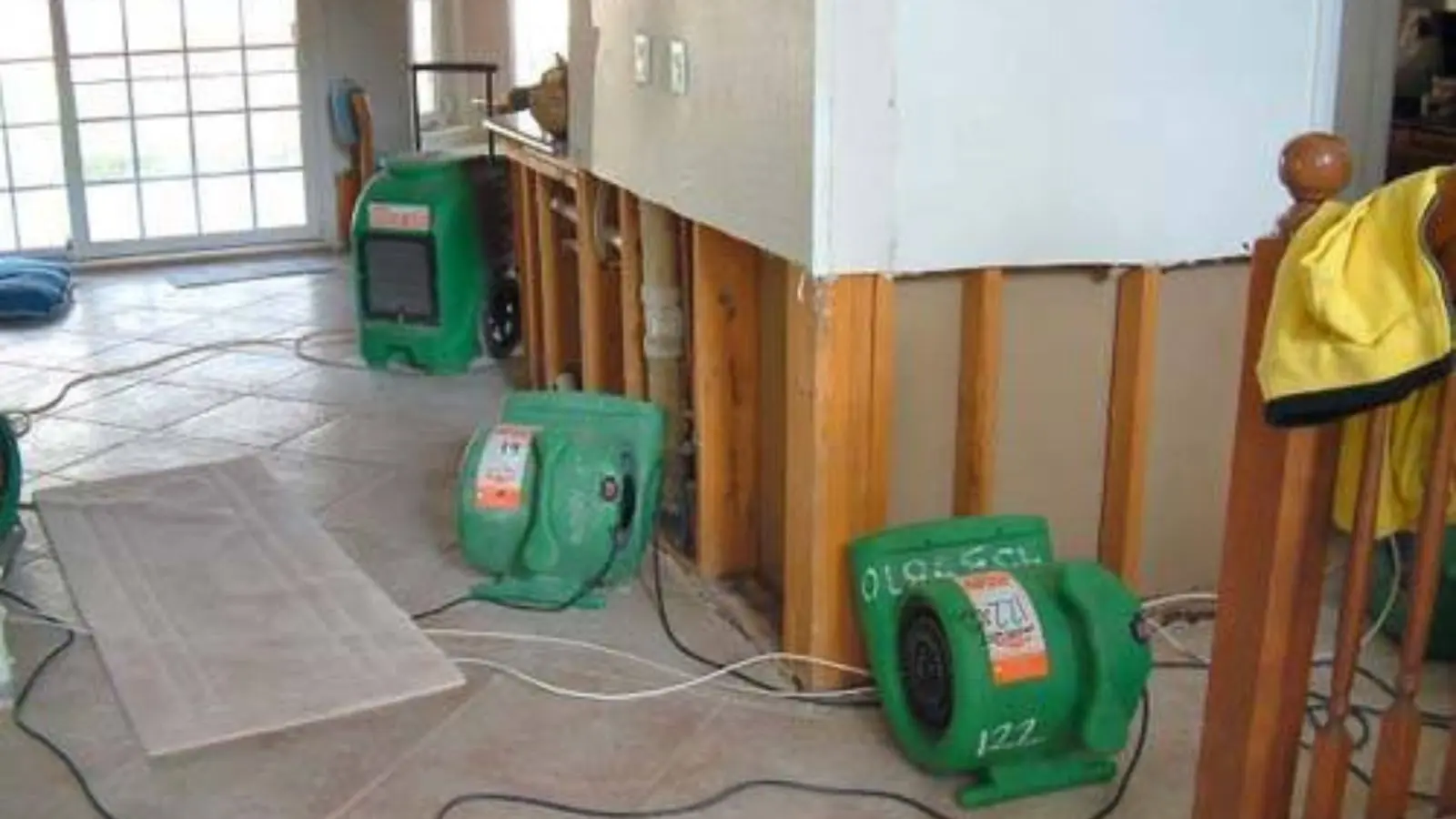
If readings stay high, the wall may need small inspection holes or a section of drywall removed so the cavity can dry with air movers and LGR dehumidifiers. Crews that work to the ANSI/IICRC S500 water damage standard follow a documented drying plan, and you can ask any company whether its crews do. Our water mitigation work starts with that kind of measured plan, with scope and price explained before work starts.
Once the structure reads dry, the finish work follows. Water damage repair covers replacing drywall, insulation and baseboard. Permit rules vary by the work, so ask Prince George's DPIE or the city before rebuilding walls, electrical or plumbing.
The line also serves nearby College Park, where the College Park water damage restoration page explains how crews respond there. Riverdale Park is covered on the Riverdale Park restoration page. Each page covers that town's own coverage details.
Frequently asked questions
Sometimes, but often not at first. A stain, bubbling paint or a musty smell is the usual early clue, and a meter reading can confirm moisture that looks normal.
A wall that looks fine can still be wet inside, especially after a slow leak.
The EPA says to dry water-damaged areas within 24 to 48 hours to prevent mold growth. Mold needs moisture, so the longer a cavity stays wet, the more likely a problem becomes.
If a wall has been damp longer than that, ask about moisture testing.
No. A thermal camera shows temperature patterns that often point to wet areas, and a moisture meter measures how wet the material is. Crews use both and confirm one with the other.
It can be. The Hyattsville Historic District has nearly 1,000 buildings according to the city's history page, and older buildings often have older supply lines and thicker wall cavities.
The age of the building alone does not prove a leak, so measure before you assume.
Not until the source is fixed and the wall reads dry. Paint over a wet wall can bubble again and can hide the evidence of an ongoing leak.
Sudden and accidental water damage is often covered, while gradual leaks and neglect often are not. Check your policy and ask your insurer, and photograph the damage before repairs.